Which VALORANT Region Delivers the Best Group Stage Action at Champions Shanghai
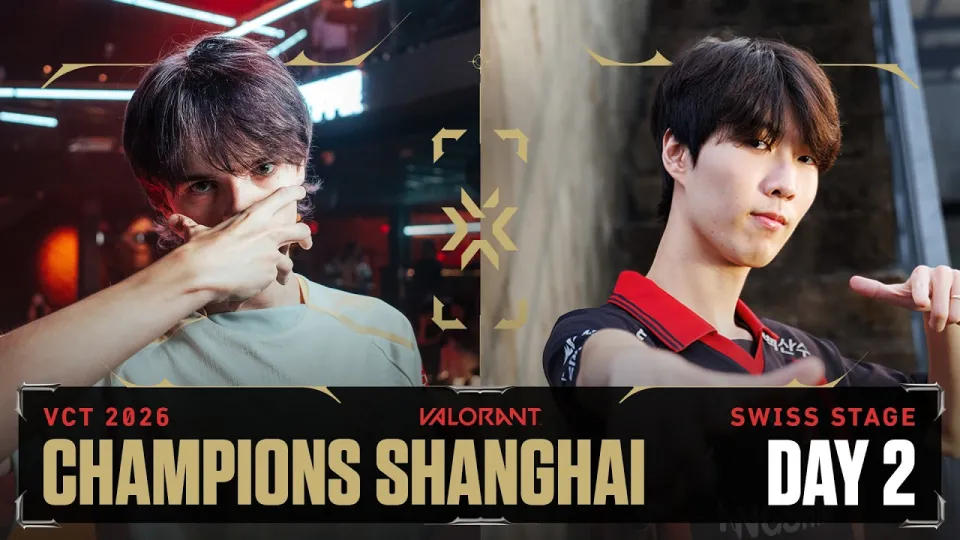
Need articles like this for your video? They help promote it on YouTube and Google — order them in the Telegram bot @sat_sit_bot. It writes articles around your video, embeds the video and publishes them on popular niche websites (no ads). Your first 50 articles are free.
· based on the channel VALORANT Champions Tour
Key takeaways
- VALORANT Champions Shanghai runs September 24 to October 18 with 16 teams from Americas, CN, EMEA and Pacific.
- Day 2 of the group stage drew a fast, one-sided slate that viewers nicknamed a speedrun day.
- China holds four of the sixteen slots, the most debated allocation in the tournament.
- The winner of the event becomes the 2026 VALORANT World Champion.
- Day 2 VOD runs past four hours and includes a full XLG comms segment in round 11 of one map.
For pure VALORANT esports value, the group stage at Champions Shanghai beats every other phase of the event, because it is the only stage where 16 teams from Americas, CN, EMEA and Pacific play the same map pool under elimination pressure in a single week. Day 2, published by the VALORANT Champions Tour channel, is the clearest example: short series, visible nerves, and a scoreboard that tells you which regions actually prepared. Follow the official VALORANT Esports account on X for schedules, brackets and live updates.
What the Shanghai group stage actually is
Champions Shanghai is the final VALORANT event of the 2026 season and the only one that crowns a World Champion. The tournament runs from September 24 to October 18 and gathers sixteen teams split across four regions: Americas, CN, EMEA and Pacific. The group stage is the first filter, and Day 2 is where the seeding starts to matter, because a single loss can push a favourite into a do-or-die decider. The broadcast itself is a full-day VOD, so the pacing of the day is part of the story: viewers in the comments described it as a speedrun, meaning most series closed faster than expected.
The four-region split and why China holds four slots
The most repeated argument around this event is not about a single team but about slot allocation. China sends four representatives, which is the same order of magnitude as the other major regions, and a large part of the audience questions whether that is justified. The counter-argument is structural: China has its own league, its own server population and its own mobile-first audience, so Riot keeps the region separate instead of merging it into Pacific. The practical consequence at Champions is simple: more CN teams means more early elimination risk for the region, and more chances for a breakout roster to prove the slot was earned.
Day 2 storylines worth watching in the VOD
Day 2 delivered a mix of blowouts and one genuinely uncomfortable moment. Three things stand out for anyone opening the full broadcast:
- Map scores that look like ranked stomps rather than international series, which is what triggered the "five Radiants versus five Bronze" comparison in the comments.
- A visible player reaction late in the day, clipped by viewers as a moment of gamer rage, which spread faster than any highlight reel.
- An XLG comms segment in round 11 of one map, later criticised as chaotic and poorly structured, which some viewers used as evidence about the region's preparation level.
None of that changes the standings by itself, but it explains why the day felt lopsided. Group stage VALORANT is decided by discipline more than by aim, and the VOD shows exactly where discipline broke down.
Common viewer questions about the format and the broadcast
Three recurring doubts come up around every Champions group stage day. First, why some series feel like mismatches: the answer is seeding plus a compressed schedule, which forces teams to play on short prep and rewards the roster with the deeper map pool. Second, why interviews take so long on stream: translated segments add a delay between the question and the answer, and viewers regularly complain that a short answer turns into a long broadcast block. Third, why Pick'ems feel easy or impossible: when a region underperforms across the board, picking against it becomes the safest strategy, and the comments around Day 2 show exactly that pattern.
How to watch the group stage efficiently
If you do not want to sit through a multi-hour VOD, the group stage still rewards a structured approach:
- Watch the map veto first, because it tells you which team expects to win and on what.
- Skip to the second half of any map that ends 13-3 or worse; the first half already decided it.
- Use the official channels for the schedule so you know which series actually affect qualification.
- Treat community spoiler blockers as useful, not decorative, if you plan to watch later in the day.
The VOD format is built for this: the day is long, but the meaningful rounds are concentrated in a handful of series.
Useful links
- VALORANT Esports on X
- VALORANT Esports on Facebook
- VALORANT Esports on Instagram
- VALORANT Esports on TikTok
- VALORANT on Twitch
Final takeaway
The Shanghai group stage is where the 2026 season stops being a debate about potential and becomes a bracket. Sixteen teams, four regions and one trophy mean the margin between a deep run and an early flight home is a single bad map, and Day 2 showed how quickly that margin closes. The four-slot CN allocation will keep being argued about as long as the results stay one-sided, but the format itself is doing its job: it separates rosters that adapt from rosters that only aim. The VALORANT Champions Tour channel is the source of this breakdown, and its full-day VODs remain the best way to judge a region for yourself. For schedules and bracket updates, check VALORANT Esports on X.
Source: VALORANT Champions Shanghai — Group Stage — Day 2 · Markdown version
Questions & answers
How many teams play in the VALORANT Champions Shanghai group stage?
Sixteen teams qualify for the event, drawn from four regions: Americas, CN, EMEA and Pacific. They are split into groups, and the group stage runs as the first phase of the tournament before playoffs. The event itself spans September 24 to October 18 and ends with the 2026 World Champion being crowned.
Why does China get four slots at Champions Shanghai?
China has its own regional league, server infrastructure and a very large player base, so it is treated as a separate region rather than being folded into Pacific. That gives CN a fixed share of the sixteen slots, similar in scale to the other major regions. Whether those slots are deserved is a recurring debate whenever CN teams exit early.
Why did some Day 2 series look so one-sided?
Group stage series are played on short preparation windows, so the team with the deeper map pool and cleaner default setups usually controls the veto and the pace. When one side loses the first half badly, the map score can look like a ranked stomp. Viewers flagged exactly that pattern on Day 2, along with a chaotic comms segment from one CN roster.
Where can I follow the official schedule and results?
The official VALORANT Esports accounts publish schedules, brackets and results across X, Facebook, Instagram, TikTok and Twitch. The X account at https://x.com/valorantesports is the fastest for live updates. Full match VODs, including group stage days, are posted on the VALORANT Champions Tour YouTube channel.